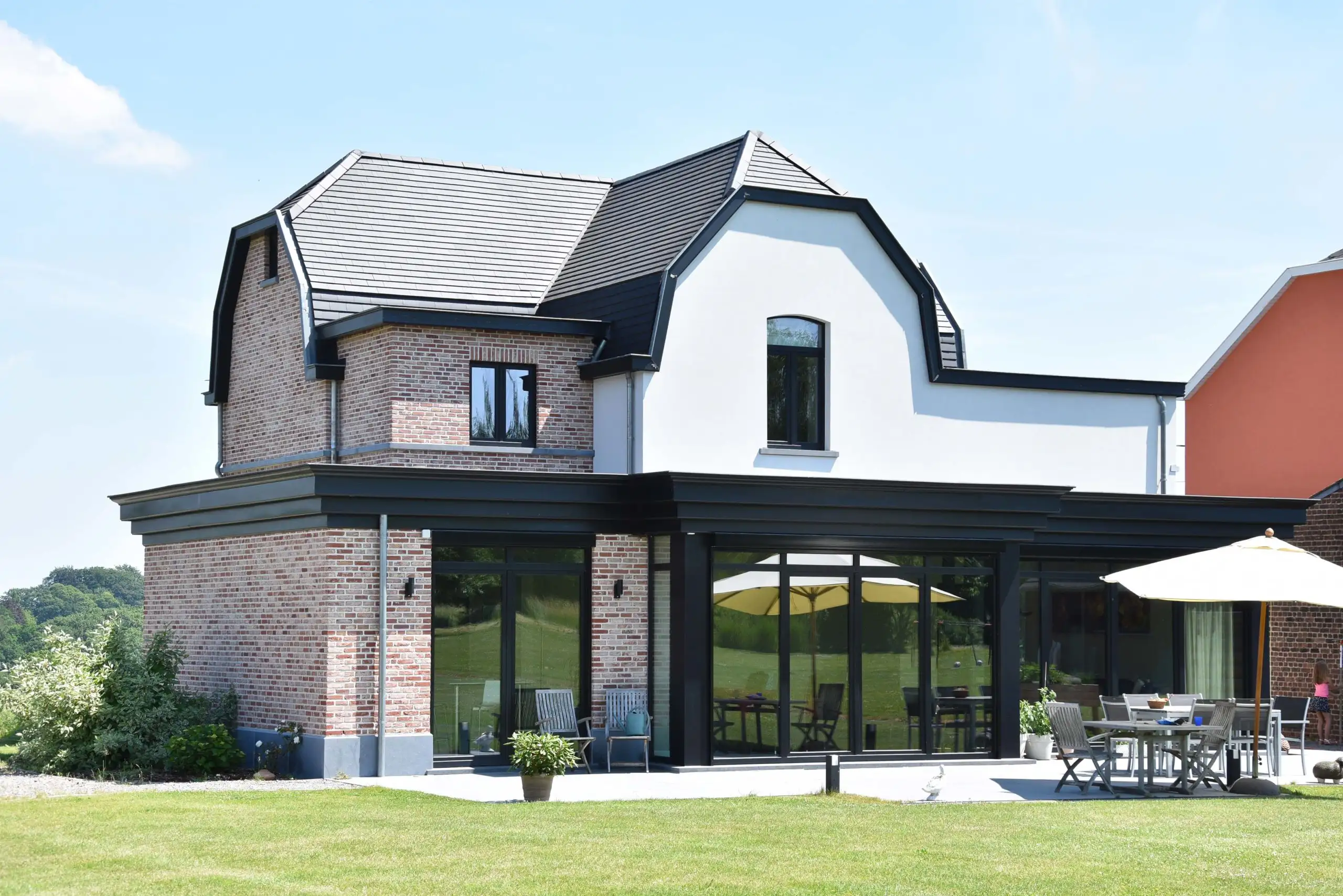
A 'serristenwoning' (greenhouse worker's house), of which there are many in this beautiful region (Overijse, Hoeilaart, Huldenberg, Tervuren). This name refers to the houses that grape growers had built in the 1920s.
Glass village
Grape cultivation made this region very wealthy between 1900 and 1970. What began in 1886, when Felix Sohie built the first grape greenhouse there, grew over the years into a region of glass villages. The peak was in 1961, when the grape-growing region was covered with some 33,000 greenhouses, 13,000 of which were in Hoeilaart. Hoeilaart rightly earned the name 'glass village'.
The decline
Around 1962, the decline began with the arrival of the European Economic Community (EEC), which led to the importation of grapes from southern countries. This was followed by the oil crisis in 1973, quickly followed by the oil crisis in 1979. The high cost of fuel oil, combined with foreign competition, forced many greenhouse growers to close their doors.
The Belgian grape today
Younger growers quickly invested in computer-controlled businesses, and today there are still around 15 companies in the region that grow grapes. Belgian grapes have lost none of their quality.
Renovation and extension of the house
Our client's home has since been renovated and extended. A combination of crepi and our Kempisch klompje was used for this. Another very impressive realization by architect Christine Ceuppens. The greenhouses used to stand at the back of the large garden. The house now has an idyllic view of a well-kept large garden and the green landscape in the beautiful region of Hoeilaart.
Click here for the link to the photos of this property.