We are noticing increasing interest in bonding or thin-bed bricklaying of facing bricks. All our facing bricks are suitable for bonding, thin-bed mortar, and traditional mortar. As long as you use the right mortar. In this article, we would like to explain the different options for laying facing bricks... We recommend that you base your choice mainly on two important factors, namely:
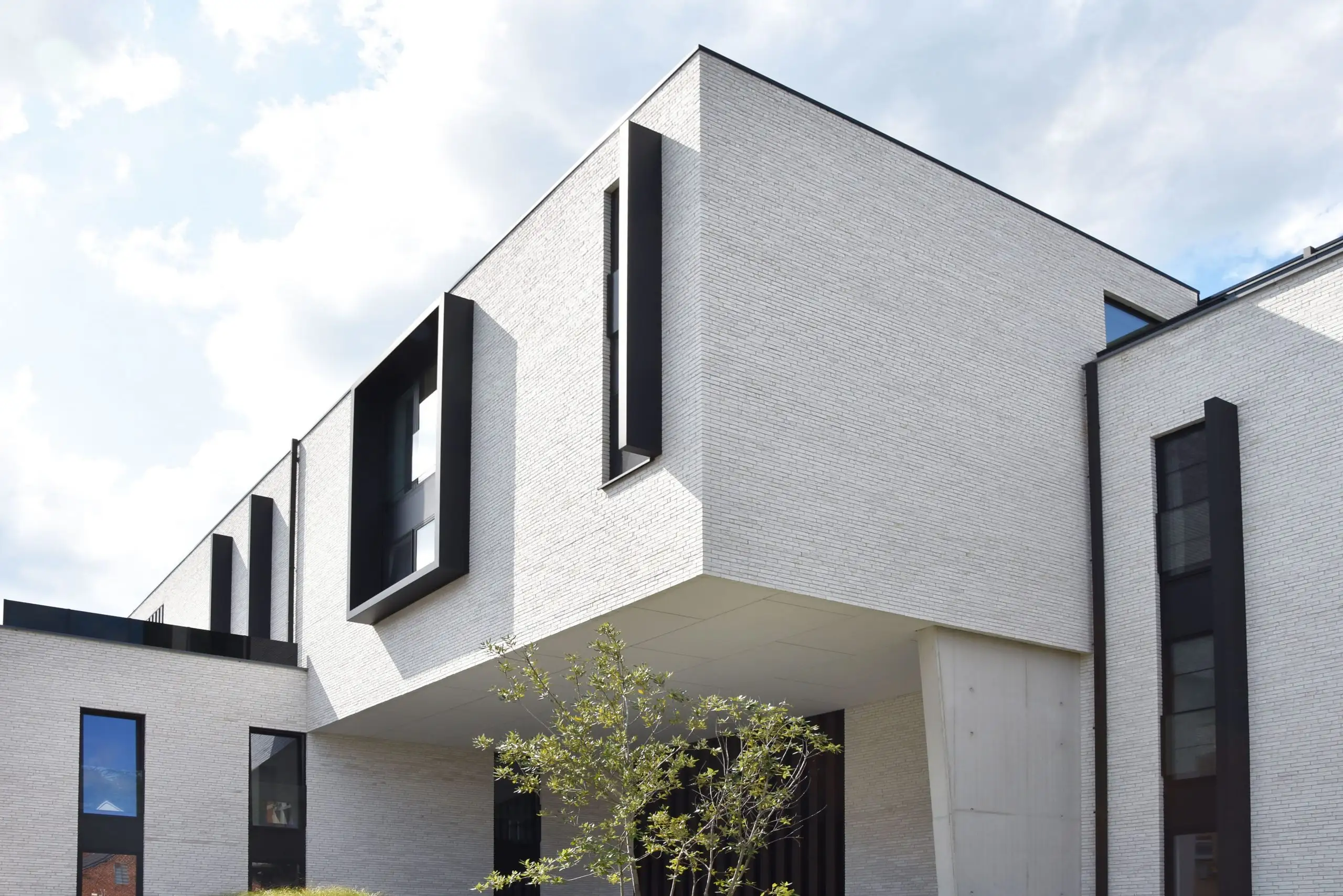
Bonding facing bricks is becoming increasingly popular. With this technique, the bricks are joined together with a thin layer of adhesive mortar. When bonding facing bricks, the emphasis of the facade's appearance lies in the color and shape of the bricks themselves. The joint is recessed and therefore has a limited impact on the appearance of the façade. The adhesive is applied using a piping bag or a mechanical pump rather than a trowel (as is the case with thin-bed or traditional bricklaying). Adhesive mortar is available in different colors. Often, a tone-on-tone mortar, in the same color as the facing brick, is very attractive. For smooth facing bricks, you achieve the most attractive aesthetic effect with adhesive mortar (compared to thin-bed mortar). Sometimes, the decision is made to leave the butt joints (vertical joints) open. This allows a limited amount of water to enter the cavity, just as with traditional masonry. On the other hand, the open joints ensure that the wall dries out more quickly. You can also choose to seal these joints with adhesive. For example, in the case of shiny insulation that would otherwise be visible, or in the case of a paler adhesive due to the shadow effect in the joint.
Most bricks have a modular bond (2x head or short side + 1 standard joint thickness = 1 stretcher or length brick). For this reason, bonded masonry is usually laid in a random bond.
Thin-bed mortar involves working with a very thin joint and using a smaller trowel than in traditional bricklaying. The appearance is almost identical to adhesive bonding, and here too you can choose from a range of colors. However, this mortar is less strong than adhesive mortar in terms of quality. Nevertheless, in certain cases it may be advisable to opt for thin-bed mortar. This is the case for irregular facing bricks, with more size deviations. The extra joint space prevents a 'floating' effect of the facing bricks.
Traditional brickwork uses a 'normal' joint mortar and joint thickness (+- 1/1.7 cm). The appearance of the facade is determined by the interplay between the facing brick and the joint color. Thirty percent of the color of the facade is determined by the joint, so the color of the joint has a very significant impact on the end result. The appearance is made or broken by the joint color.
Another technique is striking or 'flexible jointing'. This jointing technique is less commonly used in Belgium. It involves laying bricks and jointing in a single operation. This means that so much mortar is used that subsequent jointing becomes unnecessary. This gives the joints a solid appearance and makes them extremely strong.
This technique was used in the restoration of the castle wall in Ingelmunster. Watch the video by Focus WTV here: https://www.focus-wtv.be/video/leerlingen-vti-izegem-bouwen-mee-aan-kasteelmuur-ingelmunster?page=5065
Every technique has its advantages and disadvantages. In our opinion, the advantages and disadvantages of traditional bricklaying/bonding balance each other out. In terms of quality, bonding is better than thin-bed bricklaying without subsequent grouting. However, for irregular facing bricks, it may still be advisable to opt for thin-bed mortar to avoid a floating effect.
So let yourself be guided by the view you want to achieve.
In addition, it requires the expertise of the contractor.
Of course, every construction site is unique, and we recommend that you always ask the contractor for a definitive answer.